BV-BRC Web Update: New Influenza Search Features, Expanded Viral Analysis, and Improved Workflows
October 2026 | BV-BRC Web Version 3.59.14
The Bacterial and Viral Bioinformatics Resource Center (BV-BRC) has introduced several updates to improve how researchers search, analyze, and visualize pathogen genomic data. The latest web release includes new influenza search capabilities, expanded Sequence Feature Variant Type (SFVT) analysis, improvements to protein structure prediction workflows, and updates to outbreak and surveillance maps.
These enhancements are designed to make BV-BRC tools more accessible, flexible, and efficient for researchers working with bacterial and viral genomic data.
New Influenza Search Capabilities
A dedicated Influenza Search interface provides researchers with additional options for exploring influenza genomic data. Users can now search across multiple influenza viruses and genome segments, use multiple taxonomy keywords, and more easily organize their results.
The updated interface also includes improved options for customizing search results. Using the Select Columns button above the results table, researchers can choose which data fields are displayed, allowing them to focus on information most relevant to their analysis. Selected search options can also appear as default columns in the results.
Additional interface improvements provide better support for different screen sizes and web browsers. A full step by step tutorial is below please check it out and give us any feedback as needed.
Expanded Sequence Feature Variant Type (SFVT) Analysis
BV-BRC has expanded its Sequence Feature Variant Type (SFVT) functionality to include data for Ebola virus.
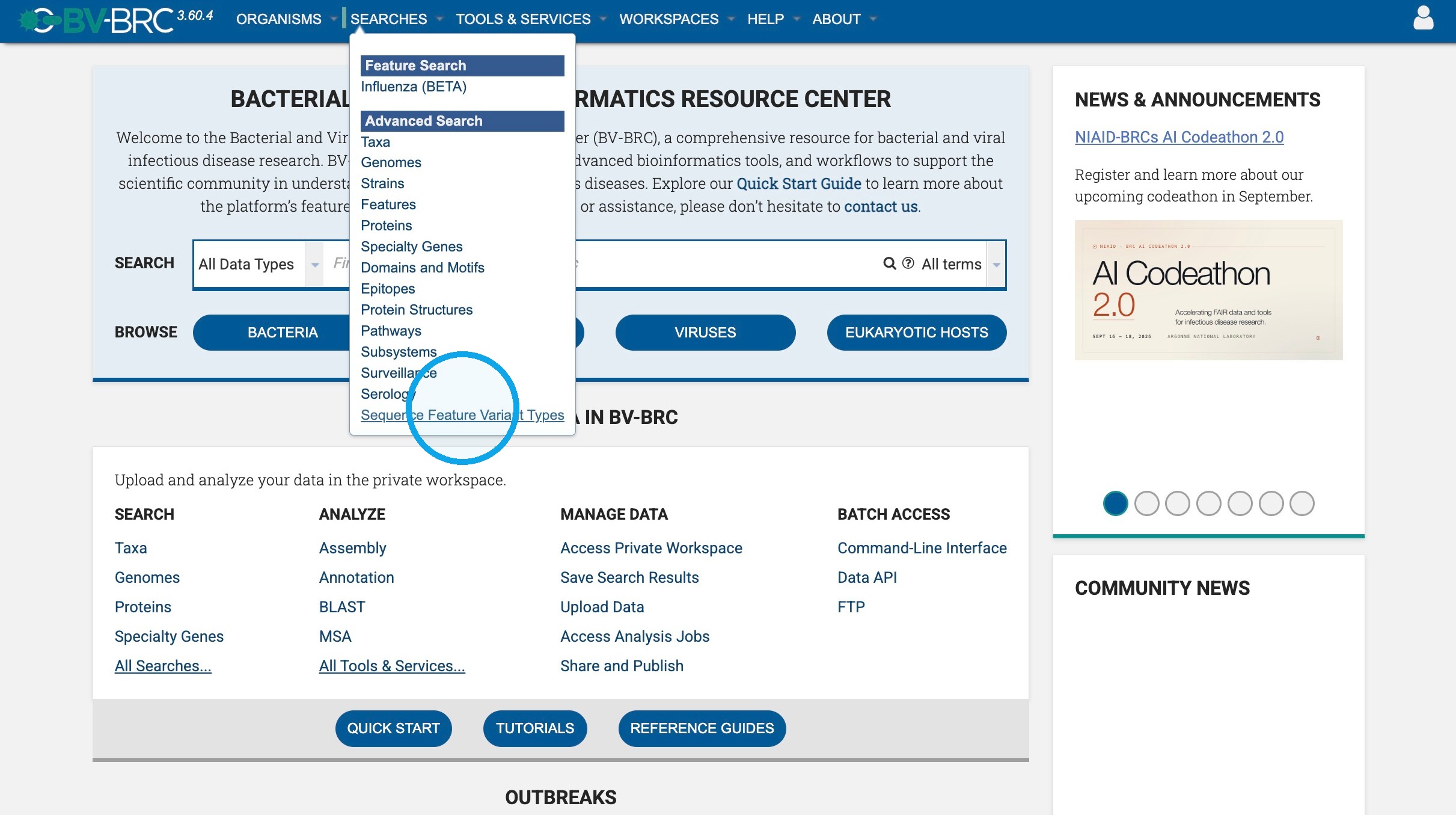
SFVT analysis helps researchers examine combinations of amino acid variations within defined sequence features. The expanded coverage provides additional opportunities to investigate viral sequence variation and compare biologically relevant features across sequences.
Researchers can explore the expanded functionality through the BV-BRC SFVT Search, which provides access to sequence feature variation data across supported viruses.
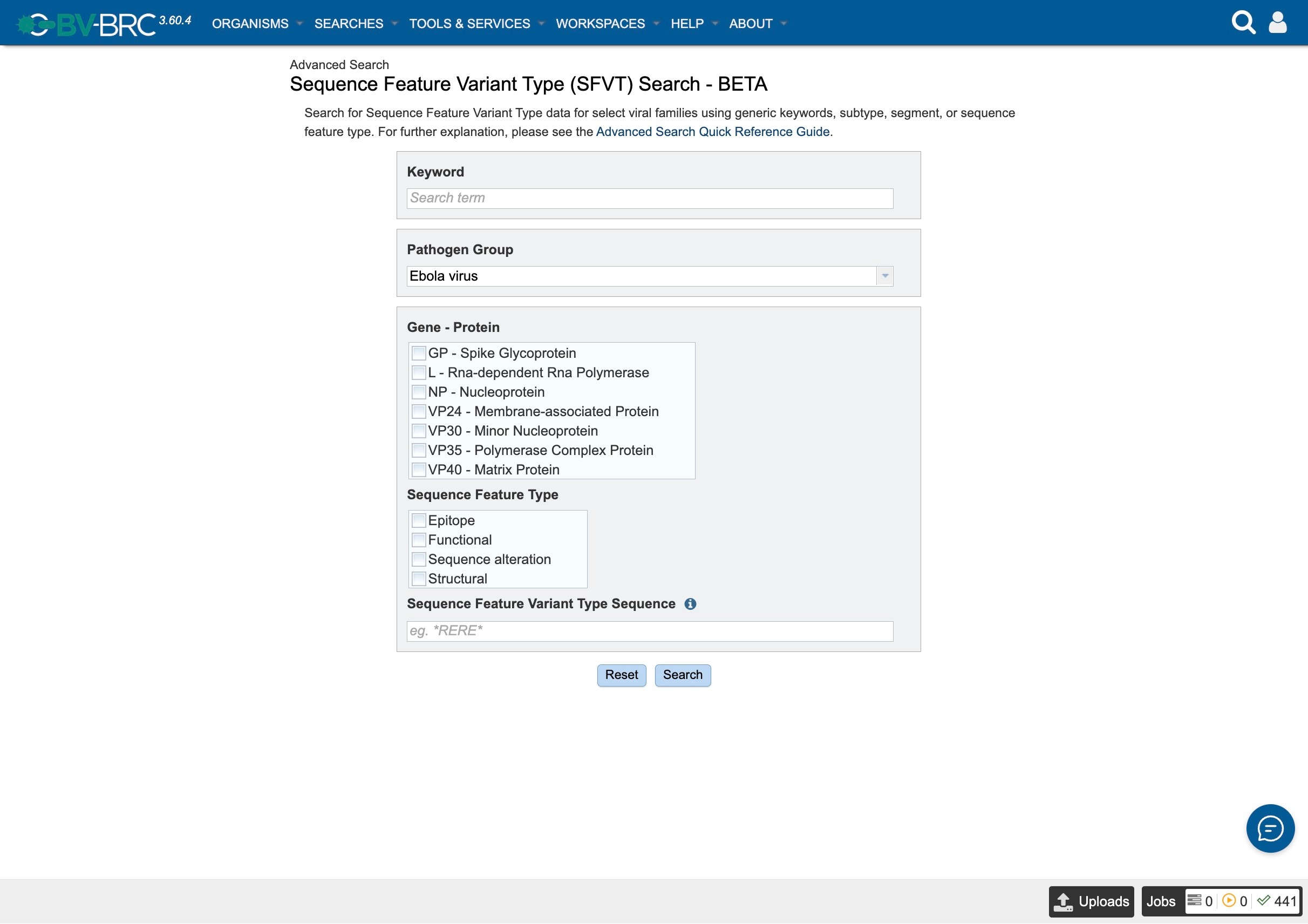
The newly available Ebola virus data can be explored directly through the Ebola SFVT page, where users can investigate sequence feature variation within the available Ebola virus datasets.
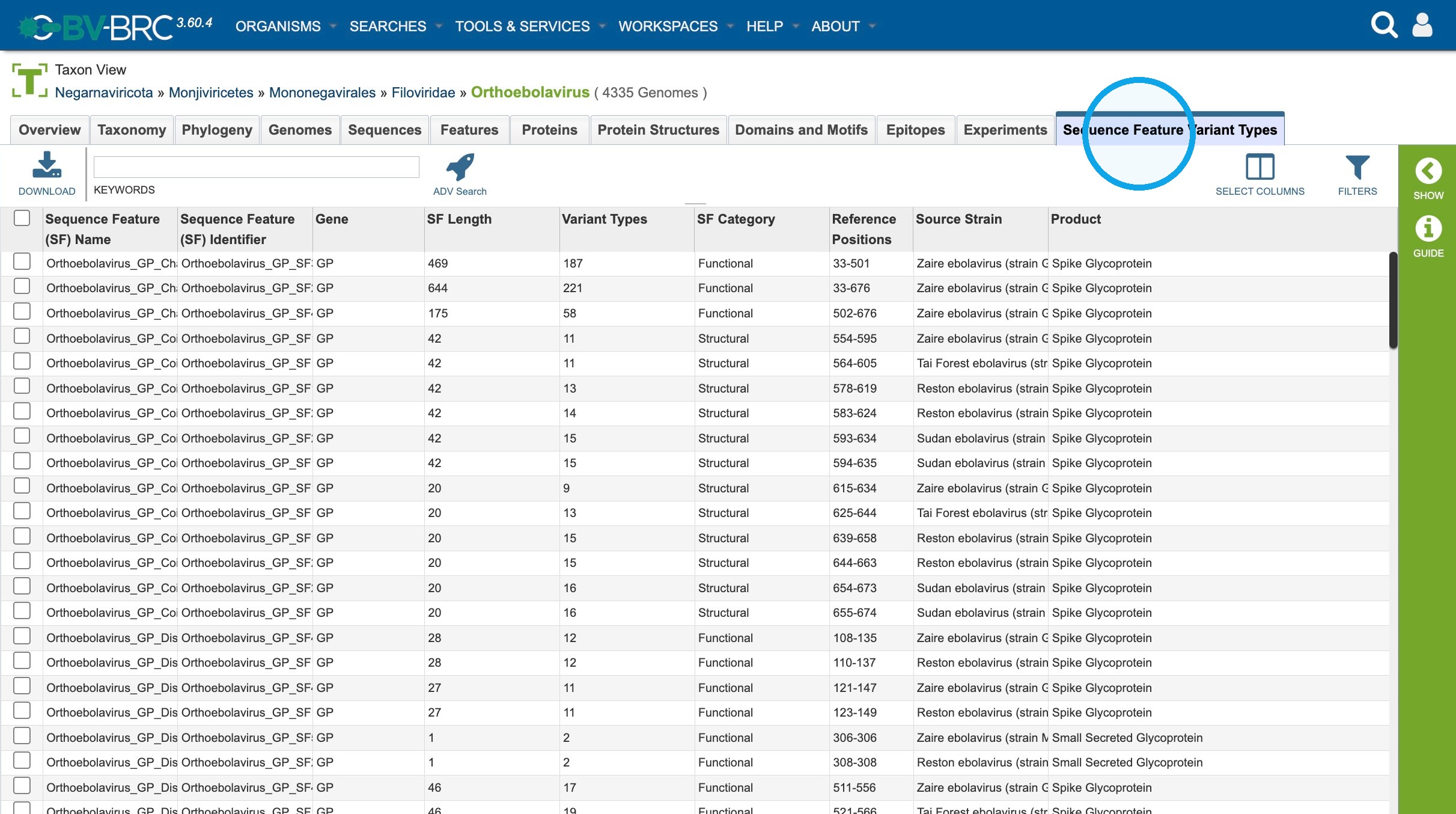
The SFVT interface has also received improvements to gene-product selection, data loading, and overall responsiveness, making it easier to navigate available data.
Updates to Protein Structure Prediction
The Predict Structure service submission form has been redesigned to provide a clearer and more intuitive experience when configuring structure prediction jobs.
Updates include improved ligand input options, controls for selecting multiple sequence alignment (MSA) sources, and a new Job Name field that previews the output location before submission.
The prediction tool selection has also been updated to include ESMFold2, while AlphaFold 2 has been removed from the available options. Additional guidance has been added to help users understand runtime expectations, MSA settings, and submission requirements.
Improved Outbreak and Surveillance Maps
BV-BRC has updated its outbreak and surveillance maps by transitioning from Google Maps to Leaflet, an open-source mapping library.
The transition includes refreshed map styling, improved legend organization, and updates to the underlying mapping components. These changes support a more consistent experience when exploring geographic and surveillance information associated with pathogen outbreaks.
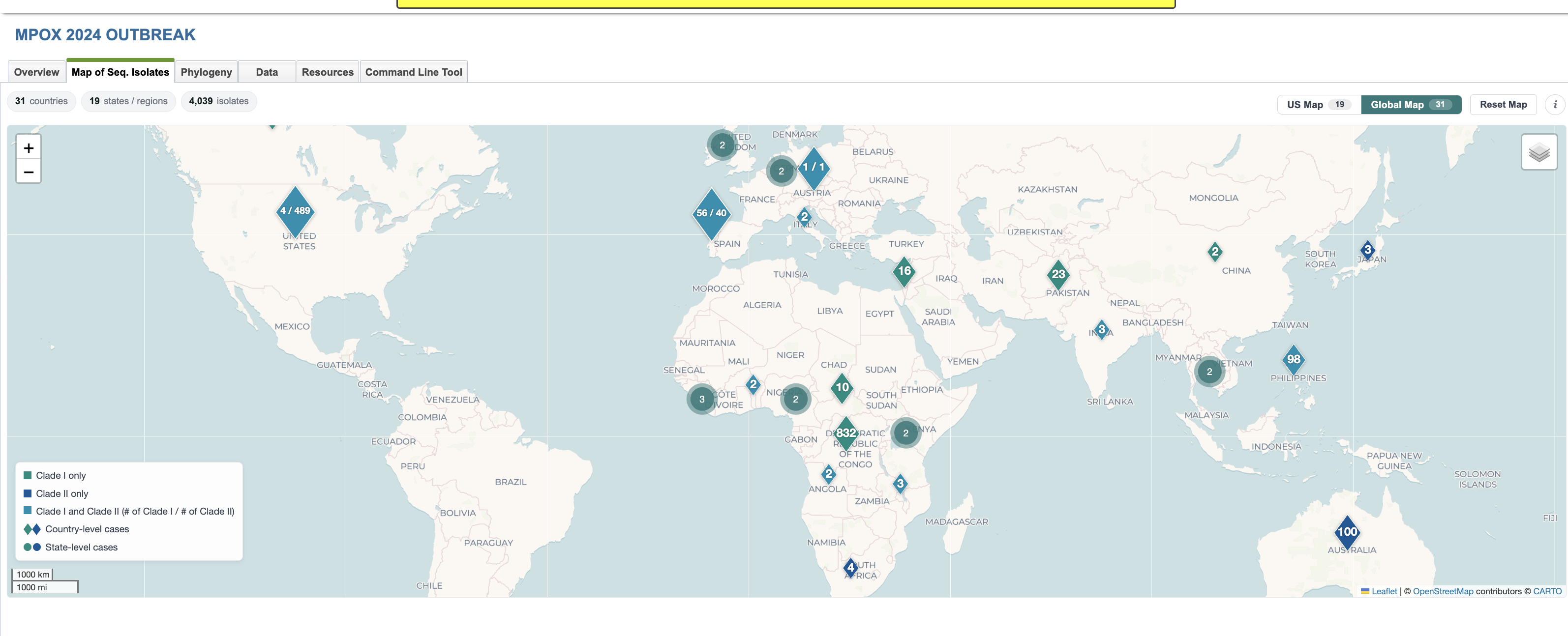
New Sequence Selection and Results Customization
The updated Influenza Search interface introduces new options for selecting sequences and customizing search results. The Select Columns feature allows users to choose which metadata fields are displayed in the results table, making it easier to focus on relevant genomic and epidemiological information.
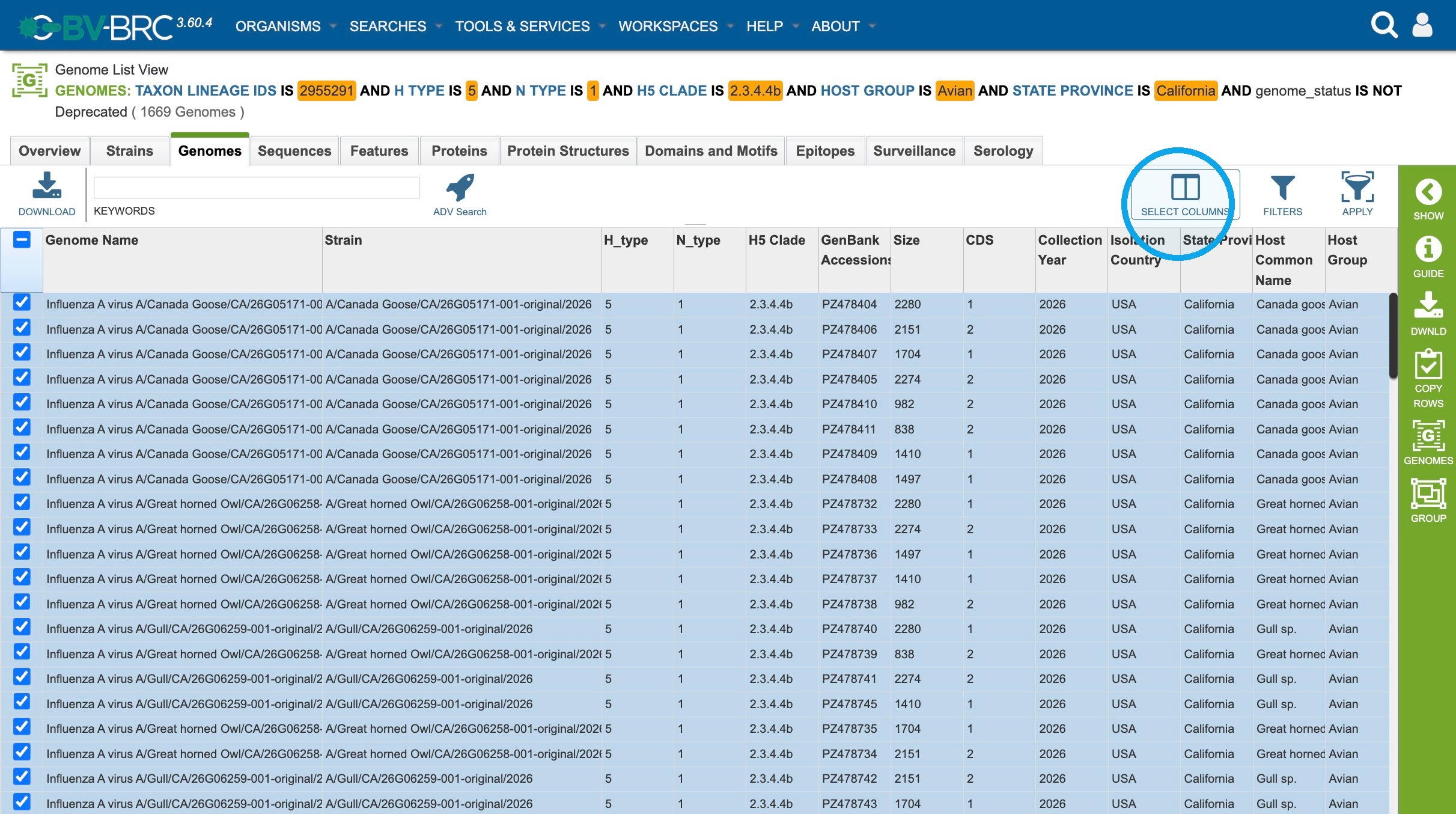
Additional Updates and Improvements
This release also includes several other enhancements across BV-BRC:
Influenza B Subspecies Classification: Additional Influenza B options are now available in the Subspecies Classification Service.
Influenza Vaccine Strain Information: A new Influenza Vaccine Strain page provides access to influenza vaccine strain information and feature highlights.
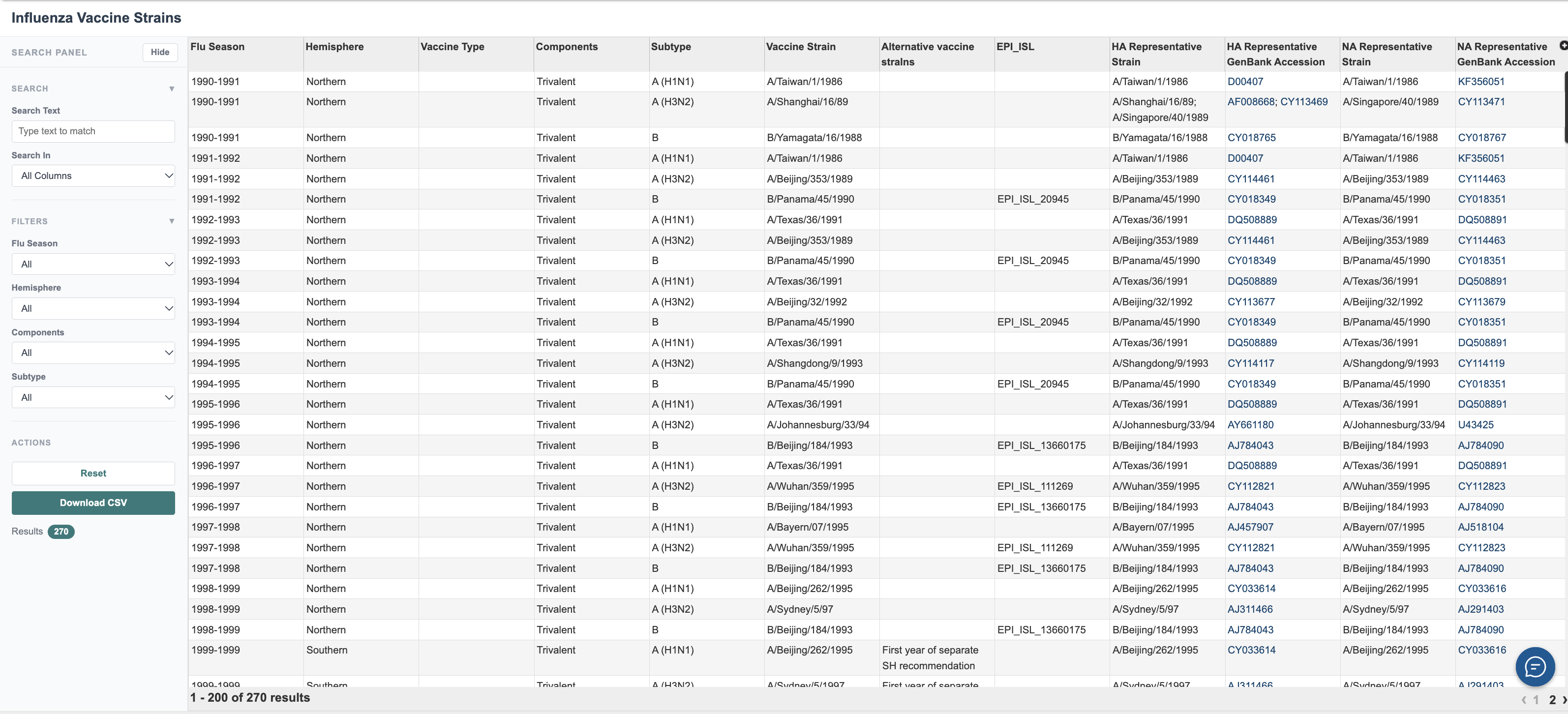
Workspace Improvements: Fixes to workspace selection, output folder navigation, and favorites management. Users can access their files through the BV-BRC Workspace.
Homology and BLAST: Improvements to metadata retrieval, large result handling, and workspace navigation. Explore the BLAST Search tool for sequence similarity analysis.
Search and Filtering: Corrections to Collection Year filtering, results display, and data retrieval.
Platform Reliability: Security updates, dependency upgrades, and infrastructure improvements to support a more stable user experience.
Explore the Latest Updates
These updates reflect BV-BRC’s continued commitment to providing accessible bioinformatics resources for the infectious disease research community.
Researchers are encouraged to explore the updated tools and features at www.bv-brc.org.
For questions, feedback, or assistance with BV-BRC services, please contact the BV-BRC Help Desk through the website.
Understanding the New Influenza Search Functionality
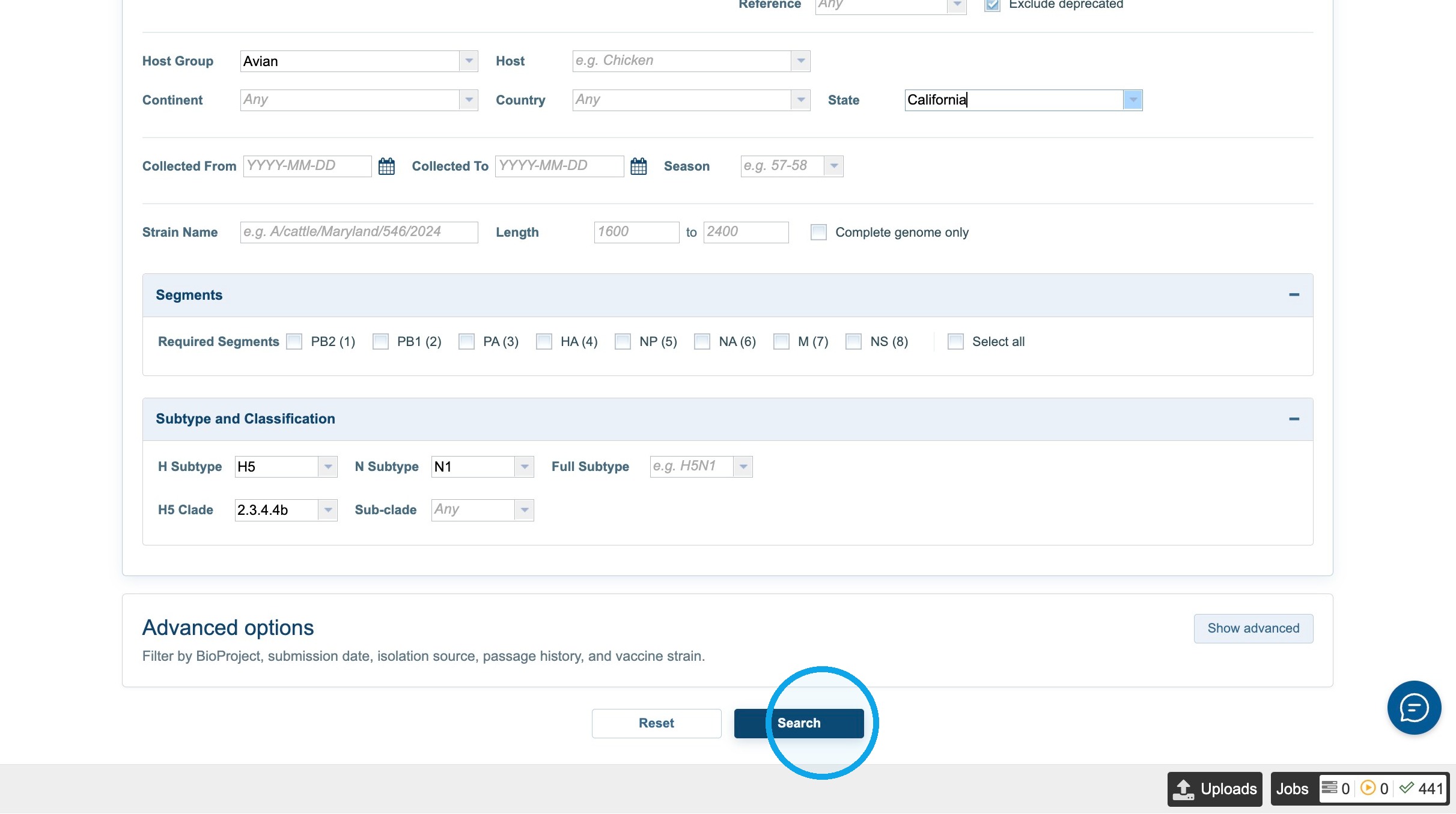
Learn how to filter and retrieve specific genomic data for H5N1 avian influenza strains using the BV-BRC platform. This example shows how to narrow results by host group, subtype, H5 clade, and location, then export DNA FASTA sequences for research.
You can also follow the illustrated step-by-step guide.
Configure Search Filters
Open Influenza (BETA) in BV-BRC.
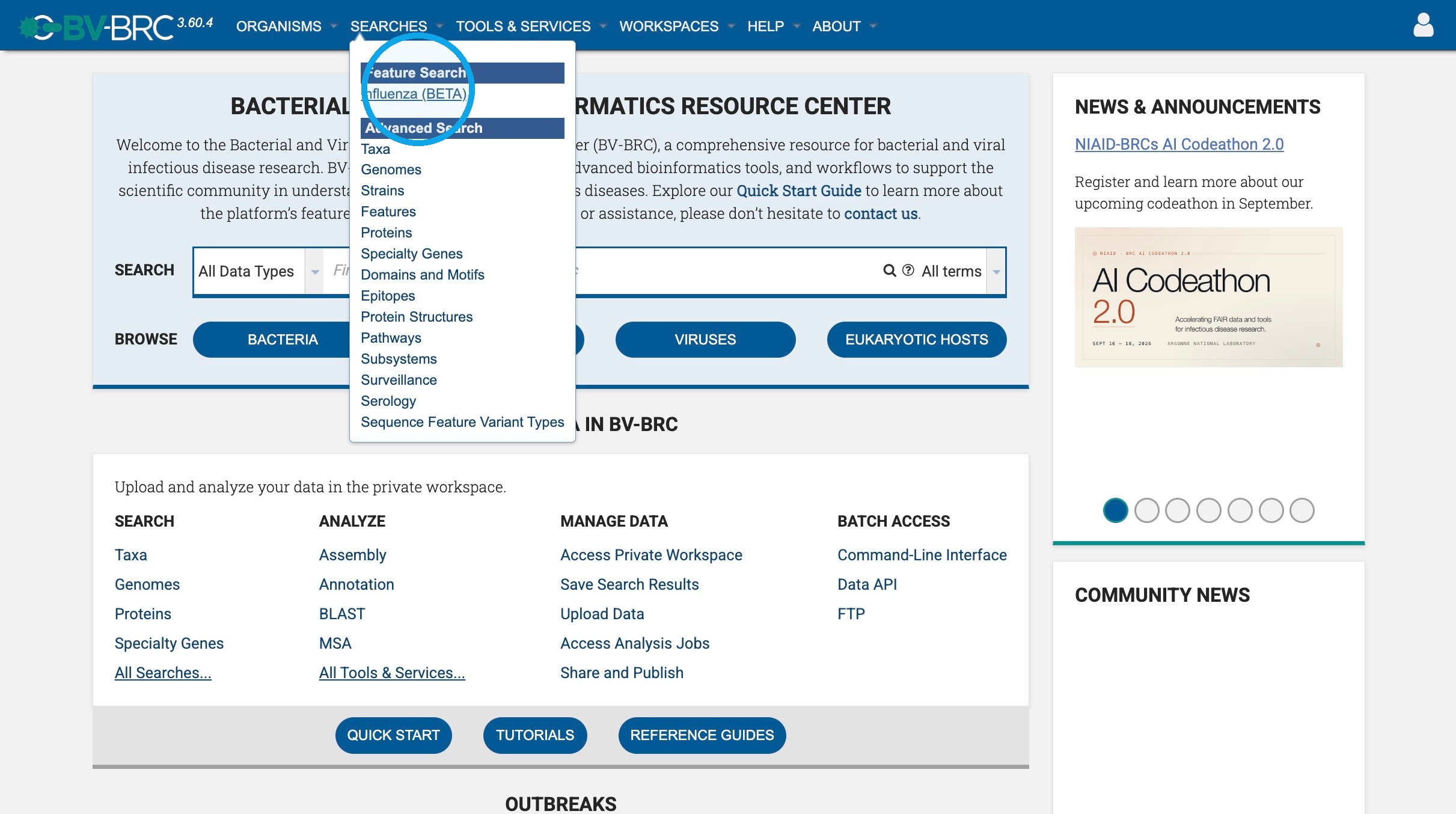
In Host Group, enter
avand select Avian.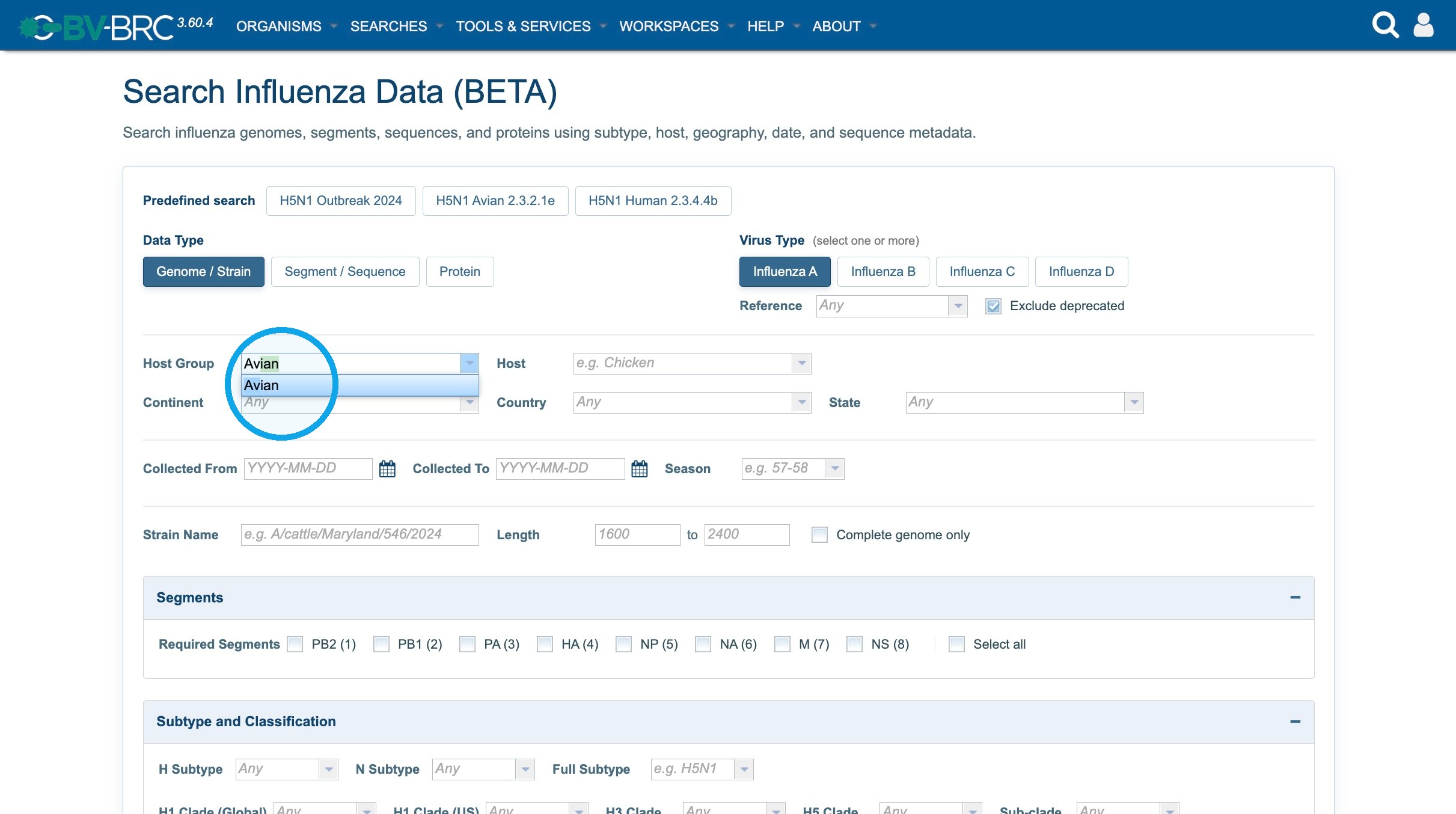
In H Subtype, select H5.
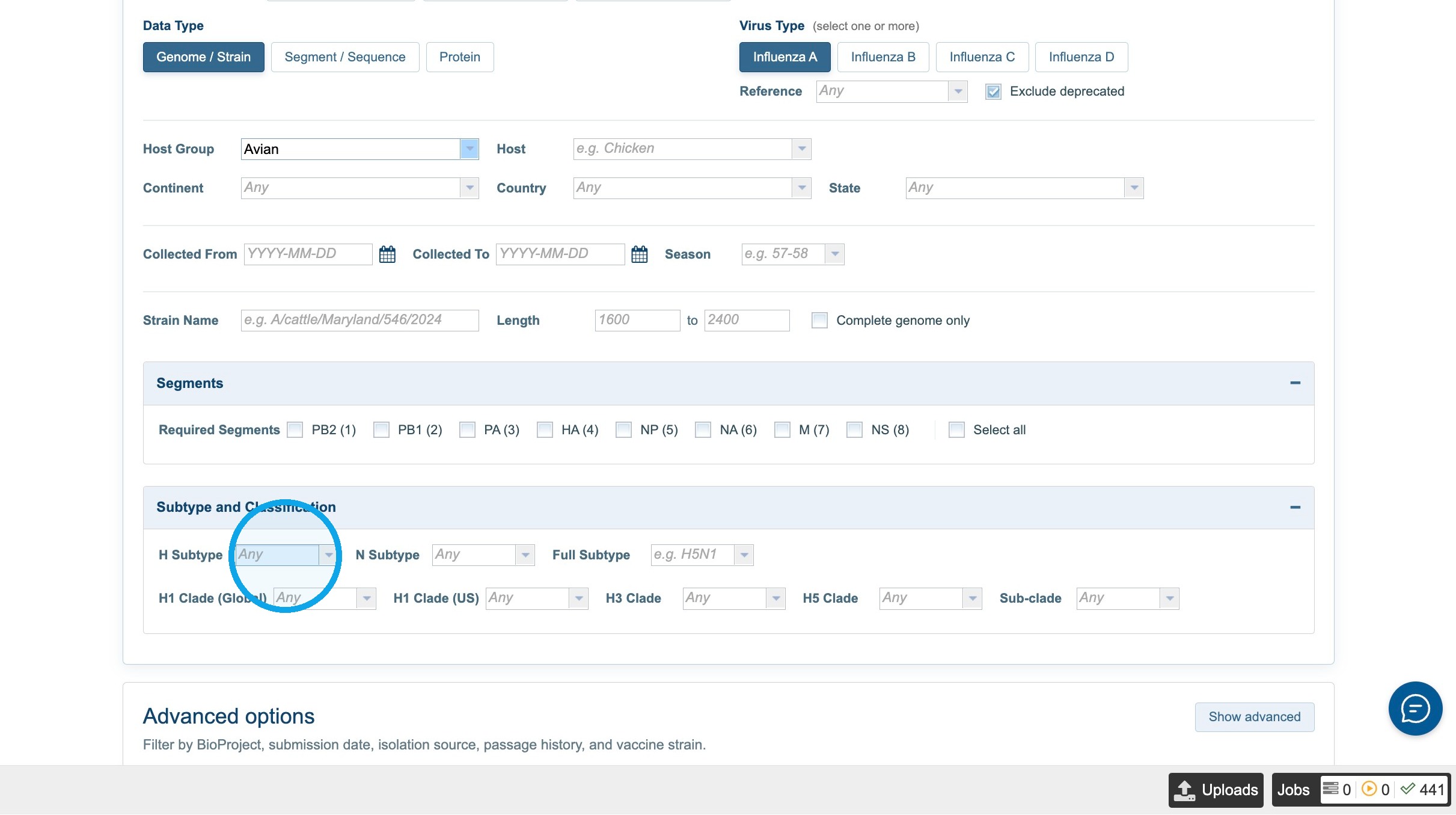
In N Subtype, select N1.
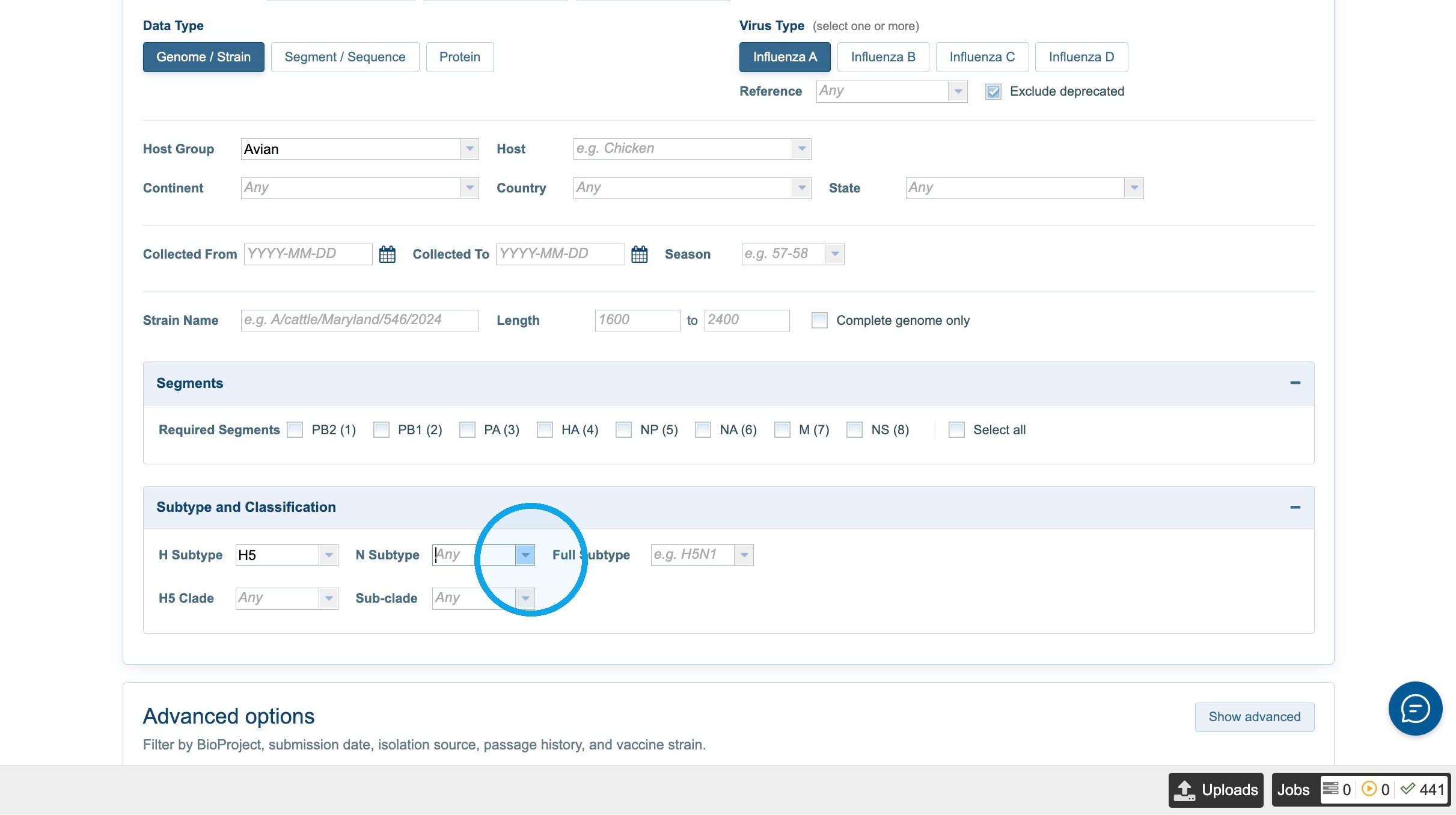
In H5 Clade, select 2.3.4.4b.
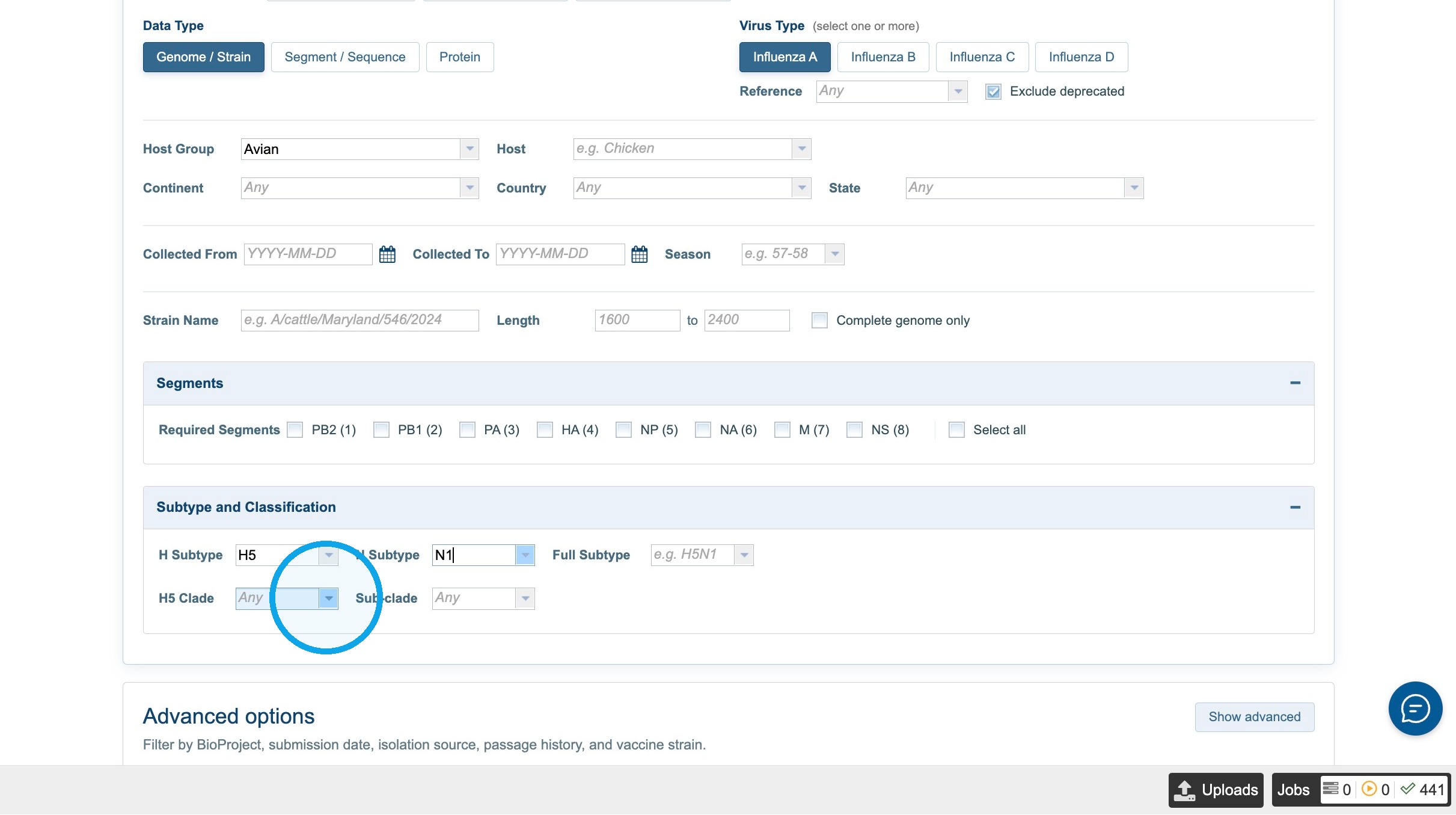
In State, select California.
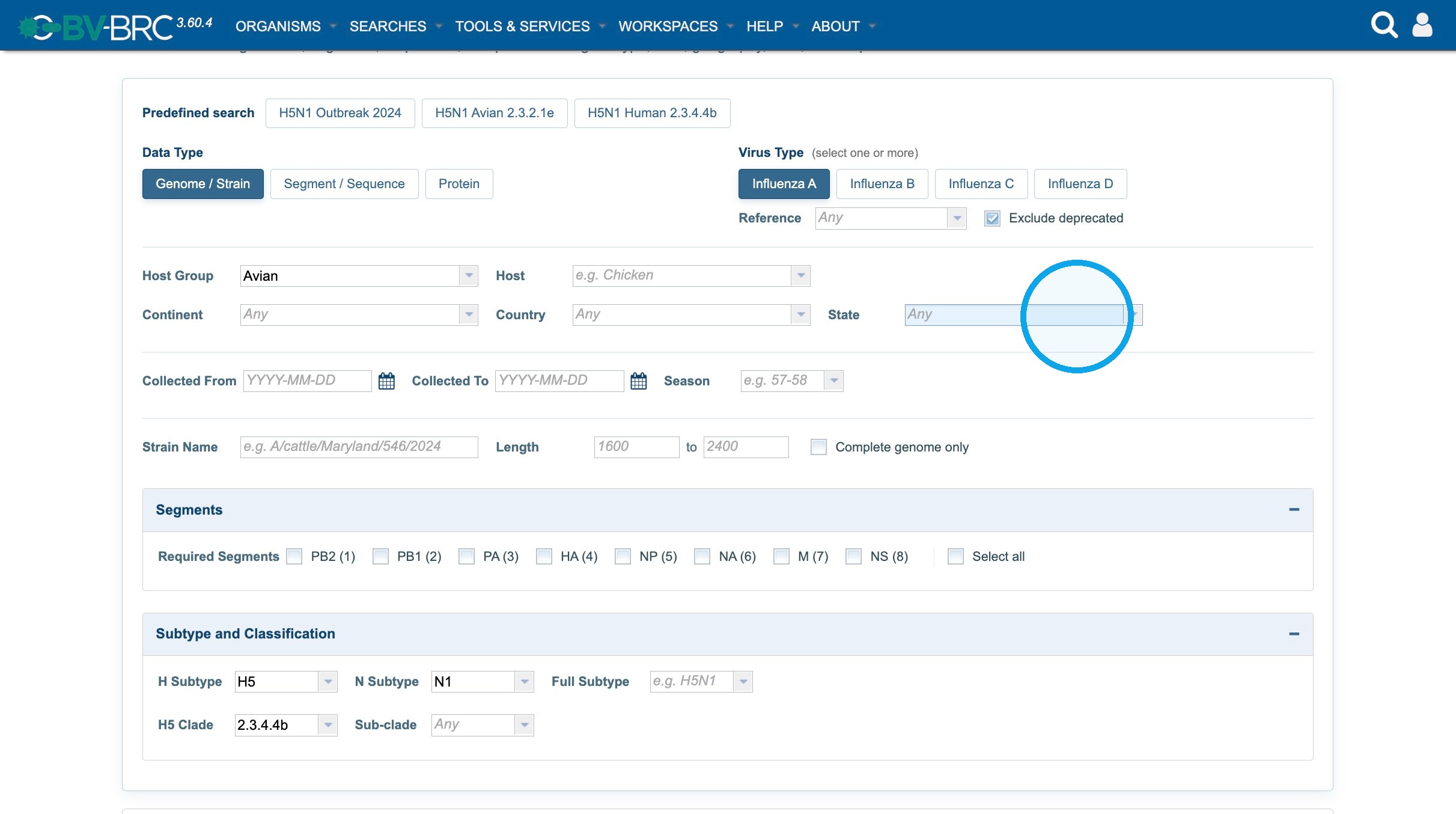
Click Search to retrieve matching records.